Altitude and the Challenge of Dead Woman’s Pass

The altitude is the most difficult aspect of the Inca Trail for many people. If you have never hiked at altitude before, then you know that the lack of oxygen can cause even basic exercise to seem tricky at first. Almost everyone who hikes the Inca Trail will be affected by the altitude to some extent. If you have spent two to three days acclimatising in Cusco beforehand, the altitude on most of the hike will not cause you any issues. If you’re worried, make sure you read our post on How to Prevent Altitude Sickness Naturally HERE.
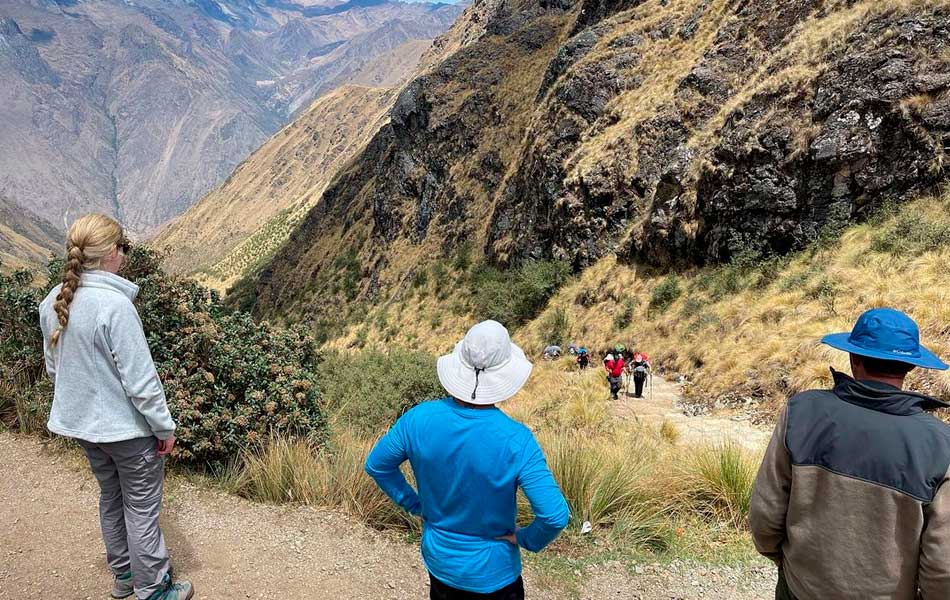
The biggest challenge of the Inca Trail is the infamous Dead Woman’s Pass. At 4,215 m (13,828 ft) it is the highest point of the trail and by far the most gruelling. As the trail gets higher, there are less trees and you become more exposed to the elements – think hot sun, cold winds or torrential rain. Climbing over 1,000 m in the space of four to six hours will definitely take its toll on the body. But the stunning views and sense of achievement at the top are well worth the effort.
I had a cold at the time so was struggling to breathe and needed to stop and have a breather every 10 or so minutes. But I made it to the top fairly easily thanks to my rest-breaks. If I can do it with exhausted adrenals (a story for another day), a parasite and a cold, then I really believe you can do it too. You healthy human.
Do you like this hike? You can book this like Inca trail here. Contact us, We are Inti Sun Trek a reliable and safe travel agency, with a trained staff that will help you to live an unforgettable experience.